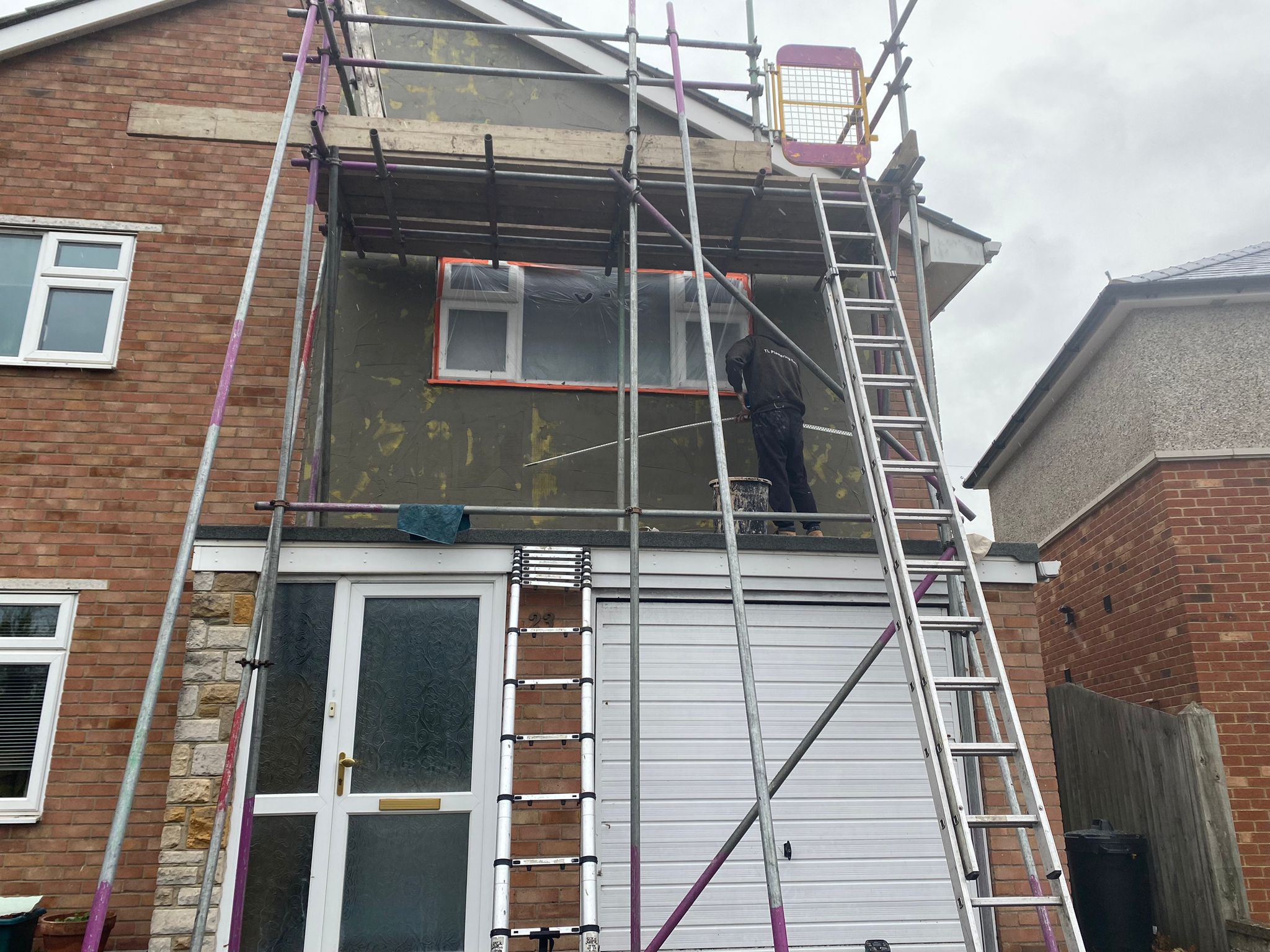

What Causes Render to Crack on Essex Homes?
Cracked render can make the outside of a property look tired, but it can also be a sign that the surface underneath needs attention.
Sometimes the issue is minor. Other times, cracked or failed render can let moisture get behind the surface, which may lead to bigger problems if it is ignored.
The important thing is this:
Do not just paint over cracked render and hope it goes away.
Paint may improve the look for a short time, but if the render has failed, the crack is likely to come back. Before repairing, painting or re-rendering, it is worth understanding why the render has cracked in the first place.
At TL Plastering Essex, we provide rendering services across Colchester and Essex, including render repairs, K-rend and silicone render, sand and cement rendering, and full exterior rendering work. This guide explains the common causes of cracked render and what homeowners should check before booking work.
First, what type of crack are you dealing with?
Not all render cracks are the same.
Before deciding what needs doing, look at:
- Is it a thin hairline crack?
- Is the crack wide or spreading?
- Is the render hollow when tapped?
- Is the render coming away from the wall?
- Is there staining around the crack?
- Is the crack close to windows, doors or corners?
- Is water getting behind the render?
- Has the render blown, bubbled or started to crumble?
- Is the crack on an extension, older wall or exposed side of the property?
A small surface crack may need a different approach from render that has fully failed or separated from the wall.
Common causes of cracked render
Render can crack for several reasons. Sometimes it is due to age and weathering. Sometimes it is caused by poor preparation or movement in the building.
The most common causes include:
- Poor surface preparation
- Moisture getting behind the render
- Old render failing underneath
- Movement in the property
- Render applied too thickly or too thinly
- Incorrect mix or application
- Lack of suitable reinforcement
- Weather exposure
- Failed previous repairs
- Cracks around windows, doors and extensions
The cause matters because the repair needs to deal with the actual problem. If the render has cracked because the surface underneath is loose, patching the outside may not last.
Hairline cracks vs larger cracks
Hairline cracks are very thin surface cracks. They may be cosmetic, but they should still be checked, especially if they are spreading or letting in water.
Larger cracks are more concerning. If you can see a wider gap, loose edges, staining or hollow areas, the render may have failed.
As a general rule:
- Fine surface cracking may sometimes be repaired.
- Hollow, loose or blown render usually needs removing.
- Cracks that allow water in should not be ignored.
- Cracks around openings may need extra care because movement often shows around windows and doors.
If you are unsure, send photos before assuming the whole wall needs replacing. Sometimes a repair is possible. Sometimes the honest answer is that the failed render needs to come off.
Poor preparation before rendering
Preparation is one of the biggest reasons render fails.
A wall needs to be suitable before new render is applied. If the surface is dusty, loose, damp, painted, unstable or poorly prepared, the render may not bond properly.
This can lead to:
- Cracking
- Hollow patches
- Blown render
- Flaking
- Water getting behind the surface
- Render coming away from the wall
This is why we do not like rendering over a problem. If the base is not right, the finish will not last as it should.
Good rendering is not just about the final coat. The preparation underneath matters just as much.
Moisture getting behind the render
Water is another common cause of render failure.
If rainwater gets behind cracked or damaged render, it can weaken the bond between the render and the wall. Over time, this may cause the render to crack further, blow or come away.
Moisture may get in through:
- Existing cracks
- Failed seals around windows or doors
- Damaged gutters
- Leaking downpipes
- Poorly maintained rooflines
- Failed old render
- Exposed walls with heavy weathering
In Essex homes, exposed external walls can take a lot of weather over time. If render is already cracked, rain and temperature changes can make the problem worse.
Before re-rendering, the cause of any water issue should be checked where possible.
Movement in the property
Buildings naturally move slightly over time. This is especially common around extensions, different materials, windows, doors and older walls.
Render can crack where there is movement underneath.
Common areas include:
- Around window corners
- Around door frames
- Where an extension joins the main building
- On older brickwork
- Around repaired areas
- Where different surfaces meet
This does not always mean there is a major structural problem, but it does mean the crack should be looked at properly. If the cause is movement, simply filling the crack may not be enough.
Old render failing underneath
Sometimes the issue is not the visible crack. It is the old render underneath.
If old render has already blown or separated from the wall, new paint or patching will not solve the issue. You may notice that the render sounds hollow when tapped, flakes away, or crumbles around the damaged area.
In these cases, the failed render often needs removing before the wall is prepared and re-rendered properly.
This is where a proper inspection matters. A wall can look fairly minor from a distance, but once tapped or checked closely, it may be clear that larger areas have failed.
Can cracked render be repaired?
Sometimes, yes.
A repair may be suitable if:
- The crack is minor
- The render is still firmly bonded
- There is no major hollowing
- Water is not getting behind the surface
- The surrounding area is sound
- The cause can be dealt with
But replacement may be needed if:
- The render is blown or hollow
- Large sections are loose
- Cracks are widespread
- Moisture has got behind the render
- The surface underneath is failing
- Previous patch repairs have failed
A good repair should not just hide the crack. It should deal with the damaged area properly.
Should you paint over cracked render?
Painting over cracked render is usually only a short-term cosmetic fix.
If the crack is still open, water may still get in. If the render underneath has failed, paint will not make it solid again. The crack may come back through the paint, and the surface may continue to deteriorate.
Before painting exterior walls, it is better to check whether the render is sound.
If it is sound, decorating may be fine. If it is cracked, blown or loose, the render should be repaired or replaced first.
What we check before recommending a repair or re-render
When looking at cracked render, we are not just looking at the visible surface. We want to understand whether the render is still bonded properly and whether the wall is ready for repair or replacement.
Things we may check include:
- Whether the render sounds hollow
- Whether cracks are spreading
- Whether there is staining or water damage
- Whether the surface is loose or crumbling
- Whether the issue is near windows, doors or gutters
- Whether the property has previous patch repairs
- Whether the wall is suitable for re-rendering
- Whether the old render needs to be removed
- Whether the finish should be K-rend, silicone render, sand and cement, or another suitable option
This helps us advise on the right next step rather than just covering the problem.
What photos should you send?
Photos can help us understand the job before visiting.
If you can, send:
- A wide photo of the whole wall
- Close-up photos of the cracks
- Photos showing windows, doors, gutters or rooflines nearby
- Photos of any staining, flaking or loose render
- A side angle if the render is bulging or uneven
- Your location in Essex
Photos do not always replace seeing the job properly, but they help us understand whether the issue looks like a repair, a larger re-rendering job, or something that needs closer inspection.
Common examples we see on Essex rendering jobs
Many rendering enquiries start with a simple question:
“Can this just be patched?”
Sometimes the answer is yes. If the surrounding render is sound and the damage is localised, a repair may be possible.
But if the render is hollow, loose, cracked in several places, or letting water in, patching may only delay the problem. In that situation, removing the failed render and preparing the wall properly may be the better long-term option.
Common situations include:
- Cracked render around windows
- Old sand and cement render starting to fail
- Render cracking on extensions
- Water getting behind damaged exterior walls
- Previous patch repairs breaking down
- Bungalows and extensions needing a cleaner K-rend finish
- Exterior walls needing repair before painting
Quick checklist before repairing cracked render
Before booking render repair or re-rendering, ask:
- Is the crack small or spreading?
- Does the render sound hollow when tapped?
- Is water getting behind the render?
- Is the crack near a window, door or gutter?
- Has the render been patched before?
- Is the wall exposed to heavy weather?
- Is the surface loose, crumbly or blown?
- Does the whole area need checking before repair?
- Are you planning to paint the outside afterwards?
- Would a new render system be more suitable than another patch?
If you are unsure, get advice before spending money on a quick surface repair.
FAQs
Can cracked render be repaired?
Yes, cracked render can sometimes be repaired if the surrounding render is still sound. If the render has blown, become hollow or started coming away from the wall, replacement may be the better option.
Is cracked render serious?
It depends on the crack. Small hairline cracks may be minor, but larger cracks, hollow areas or water staining should be checked. If water is getting behind the render, the problem can get worse over time.
Can you render over old cracked render?
Not usually if the old render is loose, hollow or failing. The surface needs to be sound before new render is applied. Rendering over failed render is unlikely to last properly.
Why does render crack around windows?
Cracks often appear around windows and doors because these areas can be more prone to movement, weaker edges, failed seals or water getting in. The cause should be checked before repair.
Can I just paint over cracked render?
Painting may hide the crack temporarily, but it will not repair failed render. If the render is cracked, loose or letting in water, it should be repaired or replaced before painting.
What type of render is best?
It depends on the property, surface condition and finish you want. Options may include sand and cement render, K-rend or silicone render. The best choice depends on the wall and the job.
Do you offer rendering in Colchester and Essex?
Yes. TL Plastering Essex provides rendering services across Colchester and surrounding areas in Essex. If you are unsure whether we cover your location, get in touch and we will let you know.
Need advice on cracked render?
If your render is cracked, hollow, stained or starting to fail, send us a few photos of the wall and your location.
We can help you understand whether the area may need a repair, removal of failed render, or a fresh render finish.
Get a free rendering quote from TL Plastering Essex.